COMING SOON!
We are finalizing the manufacturing process and will start taking orders soon.
The OFMG (Open-firmware, modular guitar) is designed for reliability, performance, and long-life. Using our years of experience with replacement strummers and frets for standard Rock Band guitars, we set out to make our ideal guitar which is not only compatible with most platforms and games today, but can also be easily repaired, modified or upgraded with more features and compatibility in the future.
Key Features:
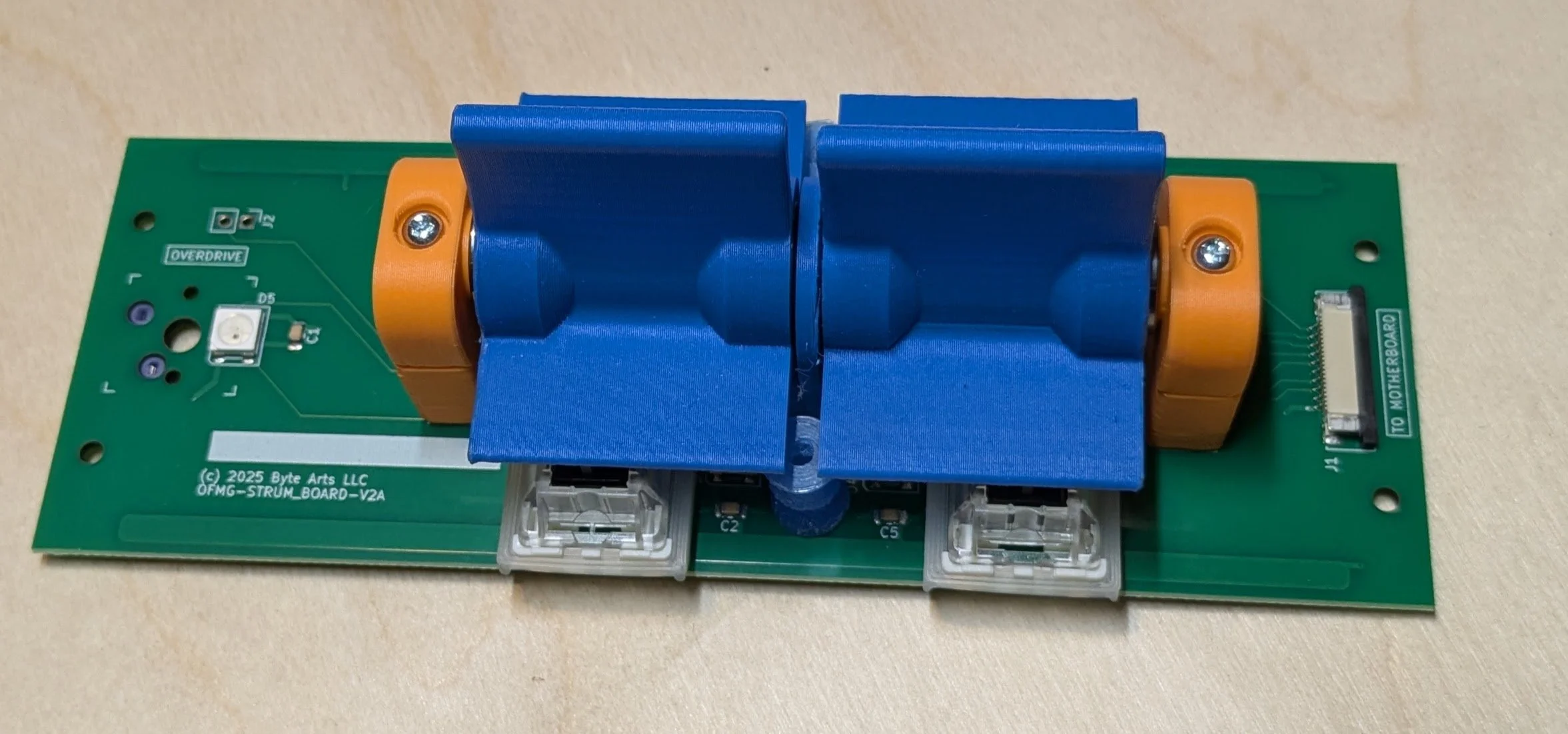
Strum mechanism with sealed ball bearings for smooth action without any loose play. User-replaceable mechanical keyboard switches.
“Overdrive” activation via dedicated button or plug a foot switch into the 3.5mm jack.
Frets use low-profile, long-life, mechanical keyboard switches.
Programmable RGB LEDs on all fret and strum switches.
Raspberry Pi PICO2 processor, installed in a socket — can be replaced/upgraded by the user.
Available with either Rock Band (rectangular) or Guitar Hero (oval) style fret buttons.
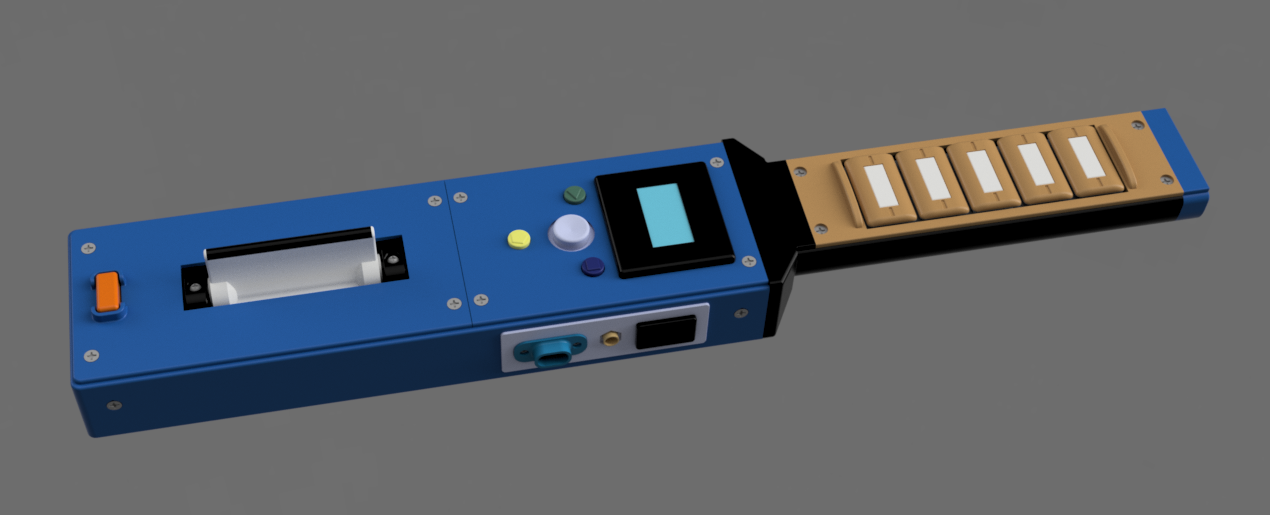
Low-latency USB C cable connection with magnetic release for connecting to console or PC. No dongle to lose.
USB A port for connecting an “official” controller to perform “authentication” when required (e.g. for Xbox).
OLED display for displaying status, diagnostic messages etc… (requires compatible firmware).
WiFi and Bluetooth capable.
Spare inputs and “Steema” port for future expansion.
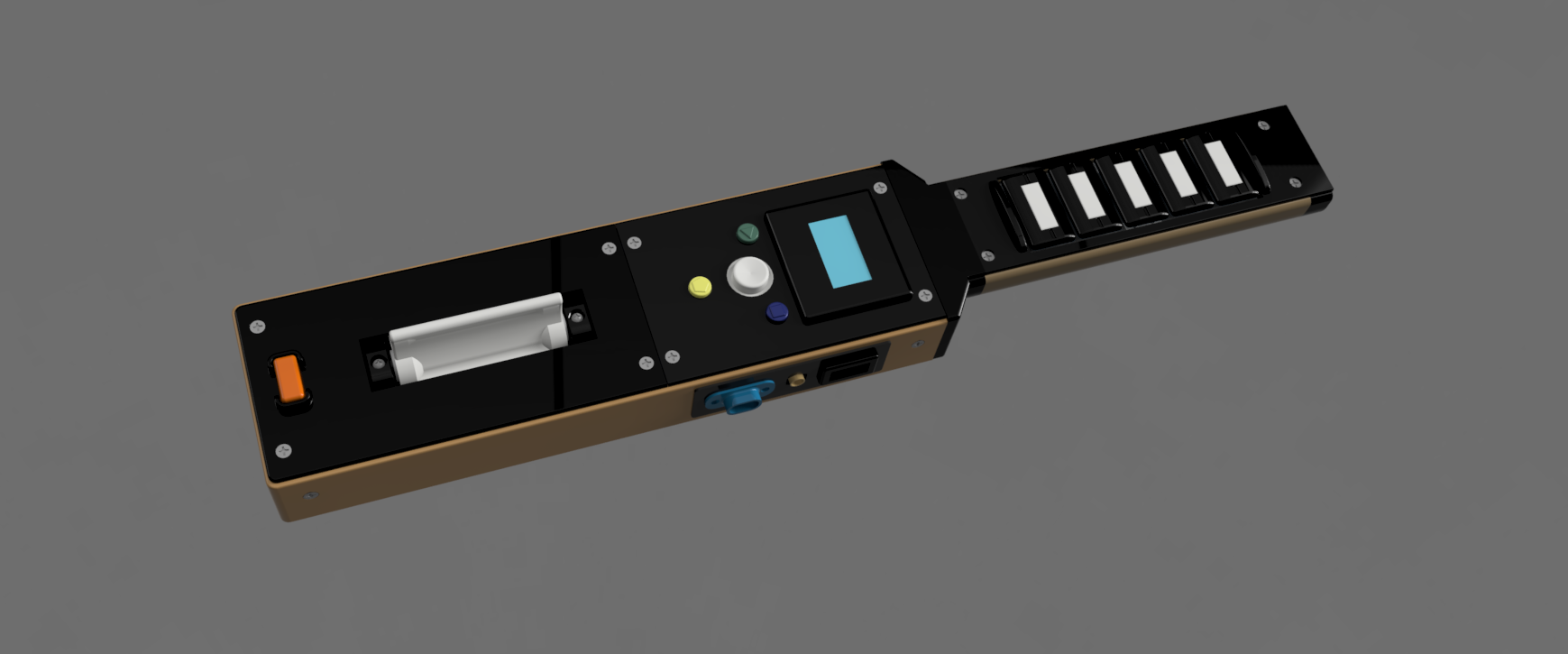
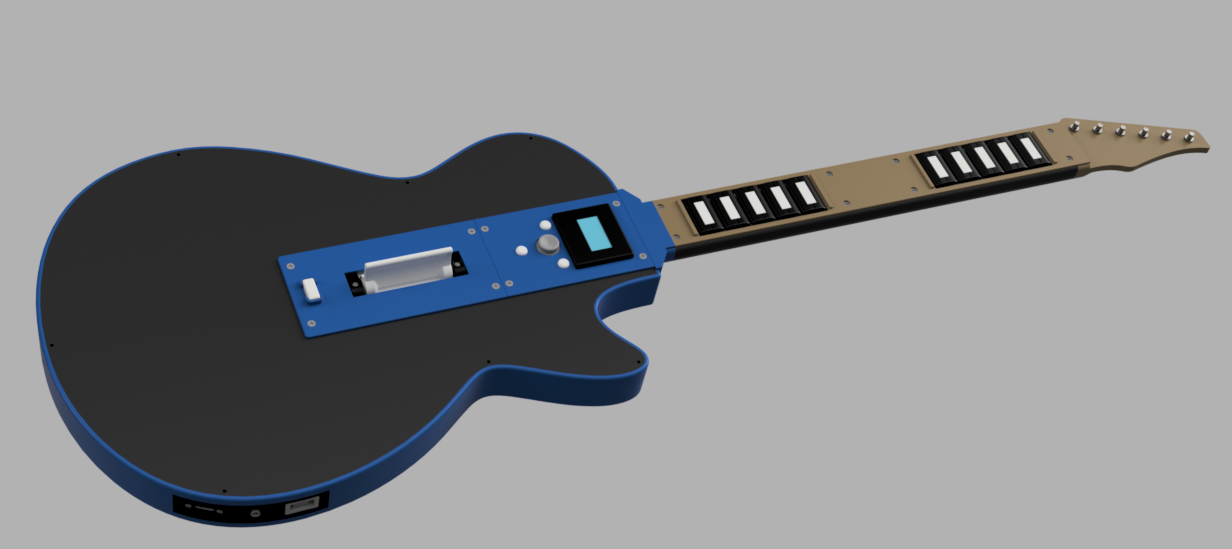
Available in “mini body” version with a short neck (with 5 fret buttons), or as a “full body” version with a full-sized, wood paneled body and 2 sets of fret buttons (10 frets total).
Custom colors and finishes can be ordered. Full body version can be supplied with unfinished birch wood panels so you can paint/stain however you wish.
Large overdrive button with “guard” to prevent accidental activation.
Open source firmware. Currently supports the Santroller firmware, the GP2040CE firmware (GP2040CE guitar support is still preliminary), and our own custom firmware (currently under development). Firmware can be written in C/C++, Python, (CircuitPython is recommended), or a variety of others.